
Inception
- MEHATVA (MEntally HAndicapped Training for Vocational Applications) is a Charitable Trust constituted specially to provide Training and habilitation to children with Mental Retardation. MEHATVA was registered as a Trust in 1998. The Trustees of MEHATVA are from various walks of life.
- MEHATVA conducts this service through a Special School called “MEHATVA Special School” in Kalpakkam. The school began operations in 1994 catering to the Special Children in and around twenty kilometres of Kalpakkam.
- Following is a narration of the inception effort by MEHATVA’s Founder President Mrs. Blossom Rodriguez in an interview in “THE HINDU” news paper which was published on 23rd January 2000.
(Online edition of India's National Newspaper Sunday, January 23, 2000)
Harnessing energy for the disabled-
During her young days, Mrs. BLOSSOM RODRIGUEZ used to hate the life in Kalpakkam, then a forlorn village which housed the Indira Gandhi Centre for Atomic Research. "It was like a prison". Two decades later, even the slight thought of leaving the place makes her sad. Eighteen mentally disabled children and "MEHATVA," where they are learning to be independent "without fear and without being laughed at" have become a part of her life and have made the once-hated township dear to her.
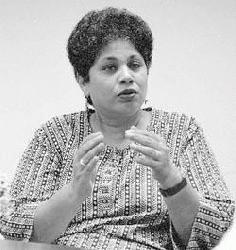
- According to her, the main problem in the field of mental disability in children is non-acceptance of the problem. "The more educated the parent, the more difficult," she tells G. PRAMOD KUMAR.
- BEFORE THE Women's Association for Children in Kalpakkam township of the Atomic Energy Department started its special school in an "aluminium hut," in 1994, there was absolutely no facility in the region to help mentally disabled children. Over the years, the organisation has transformed itself into "MEHATVA" (Mentally Handicapped Training for Vocational Applications), and has grown in size, respectability and expertise. The eighteen children at the school are now being trained in functional abilities like managing their lives without external support, cooking, shopping, cleaning and a series of things, which may appear simple to the normal world but are capable of changing the quality of their lives for ever. The rationale of the school is therefore simple. "You have to find activity that will be useful to them," says Ms. Rodriguez, the force behind the school.
- The once "home-bound" Ms.Rodriguez, who was more interested in piano, history and archaeology, now finds herself fully immersed in the functioning of "MEHATVA". "It has grown big," she says. But that is not enough.
- The number of children admitted at the school hardly represents the reality and highlights the "denial" harboured by parents. Ms. Rodriguez's main aim is to address this issue. "The battle we are facing is non-acceptability". And this attitude towards the problem can be debilitating in future.
- By the time the parents come out of their denial, it will be late. Early intervention "can narrow the gap between the mental age and chronological age" and in terms of functional ability, it really means a lot for the child. "If I hide my problem, people will talk. If I accept it, nobody will ask anything," she adds. The Logo of MEHATVA itself is empowering. Women and child, a glowing sun and the symbol of atomic energy representing the Department of Atomic Energy, which has been a support to the organisation.
- Though Ms. Rodriguez is grateful to the Nuclear Power Corporation (NPC), 35 individuals and the Indira Gandhi Centre for Atomic Research (IGCAR) for their support to the institution, Dr. P. Jeyachandran, a renowned psychologist in the field of mental retardation, deserves special mention. He is a part of the institution "right from prescribing individual programme for our students and handpicking our teachers to the design of the school building and furniture," she says. Similarly, the Madhuram Narayanan Centre for Exceptional Children in Chennai also extends its professional expertise in training children with mental disabilities and developmental delays and also professionals and para-professionals.
- And for a change, there is a man behind this successful woman: her husband who also shares her interest in music and history, Dr. Placid Rodriguez, Director, IGCAR.